My novel about love, betrayal and chess in New Orleans: The Pride and the Sorrow

Sunday, March 21, 2010

The Case of Amy Bishop: Violence that Art Didn't See Coming

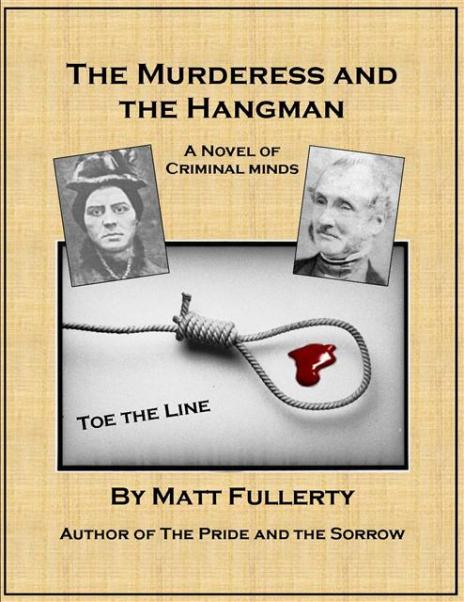
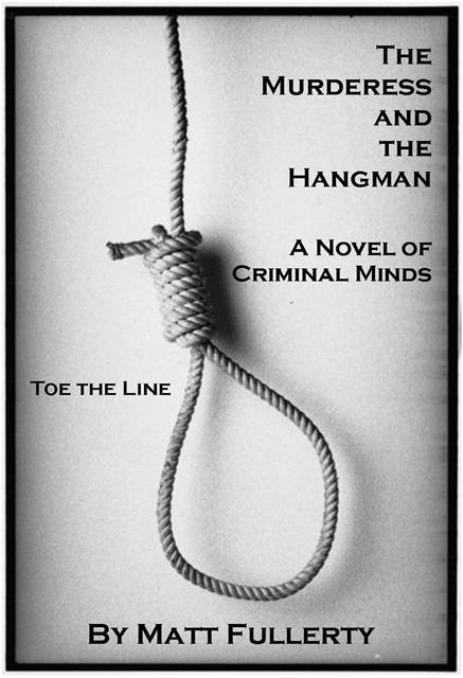
This is Kate Webster, female killer from my novel The Murderess and the Hangman. For more about the novel, please see my homepage here.

The following article from The New York Times deals with the role of female killers and art, particularly in light of the recent shootings by Amy Bishop, a professor at the University of Alabama.

--

When Ezra Pound declared in 1934 that “artists are the antennae of the race,” and Marshall McLuhan 30 years later called them people “of integral awareness,” both were using modern terms to update the ancient belief that works of the imagination might actually require a talent not only for invention but for attunement — for picking up signals already in the air. This is why the most forceful narratives and dramas seem less made up than distilled. They clarify events and experiences taken directly from the actual world.

Thus, the Jazz Age is better known through the fiction of F. Scott Fitzgerald, who captured its energies in real time, than through any number of retrospective studies. And the alienated teenager, that fixture of modern American life, didn’t fully exist until J. D. Salinger, with his faultless ear and attentive eye, coaxed him into being.

But every now and then, it seems, a gap is exposed. Events occur; art offers no guidance. The powers of imagination and attunement falter. Artists suffer a collective loss of awareness. “The culture” emits signals, but they are picked up only fitfully or are missed altogether.

Consider the case of Amy Bishop, the neuroscientist arrested for shooting six colleagues, killing three, at a department meeting at the University of Alabama in Huntsville. Rampages of this sort have become familiar. But with rare exceptions they have been the preserve of men: lonely, alienated psycho killers with arsenals of high-powered weapons and feverishly composed manifestos.

With remarkable suddenness Dr. Bishop has disrupted the pattern. When she reportedly discharged her 9-millimeter handgun, she also punctured longstanding assumptions, or illusions, about women and violence — particularly as a fuller picture of her past begins to emerge, much of it indicating a possible record of previous violent episodes, including the shooting death of her brother in 1986, and her suspected role in assembling a pipe bomb mailed to a faculty member at the Harvard Medical School in 1994, when Dr. Bishop was studying there.

It is not news that so-called senseless acts often unfold along the coordinates of an inner logic. This is what makes criminal violence so attractive a topic for artists and thinkers. The Western literary tradition, from Shakespeare to Dostoevsky, teems with pathologically violent men. Norman Mailer and Truman Capote wrote nonfiction masterpieces about them. They dominate the novels of Don DeLillo and Robert Stone, not to mention films by Sam Peckinpah, Francis Ford Coppola and Martin Scorsese.

But the landscape of unprovoked but premeditated female violence remains strangely unexplored. Women who kill are “relegated to an ‘exceptional case’ status that rests upon some exceptional, or untoward killing circumstance: the battered wife who kills her abusive husband; the postpartum psychotic mother who kills her newborn infant,” Candice Skrapec, a professor of criminology, noted in “The Female Serial Killer,” an essay included in the anthology “Moving Targets: Women, Murder and Representation” (1994).

Ms. Skrapec was writing at a time when Hollywood seemed preoccupied with women who commit crimes — in productions like “The Burning Bed,” the 1984 television film in which a battered wife finally sets her sleeping husband aflame, and “Thelma & Louise” (1991), in which a pair of women go on a outlaw spree after one of them is threatened with rape.

Both are essentially exculpatory parables of empowerment, anchored in feminist ideology. Their heroines originate as victims, pushed to criminal excesses by injustices done to them. The true aggressors are the men who mistreat and objectify them. So too with “Monster” (2003), in which Charlize Theron, in a virtuosic instance of empathy (and cosmetic makeover) re-enacted the story of Aileen Wuornos, a real-life prostitute who, after years of sexual abuse, began murdering her clients.

A decade or two ago this all made sense. The underworld of domestic abuse and sexual violence was coming freshly to light. And social arrangements were undergoing abrupt revision. The woman who achieved hard-won success in the workplace might well find herself, like the lonely stalker played by Glenn Close in “Fatal Attraction” (1987), tormented by the perfect-seeming family of the married man with whom she enjoys a weekend fling.

Much has changed since then, but the topic of women and violence — especially as represented by women — remains more or less in a time warp, bound by the themes of sexual and domestic trauma, just as male depictions of female violence are locked in the noir demimonde of fantasy, the slinky femmes fatales once played by Barbara Stanwyck and Lana Turner more or less duplicated by Kathleen Turner and Sharon Stone.

Put it another way. It is not hard to imagine Mr. DeLillo or Mr. Scorsese mapping the interior circuitry of Timothy McVeigh; Seung-Hui Cho, the Virginia Tech killer; or Bruce E. Ivins, the Army biodefense expert who, the F.B.I. concluded last week, committed anthrax terror in the aftermath of 9/11 — the paranoia, the lethal mix of fantasy and ruthless plotting. But what artist might do justice to Dr. Bishop and her complex story, as its details have so far been reported: the privileged upbringing; her stable marriage to a uxorious husband, who was also her collaborator on scientific inventions; their four children, some of whose homework Dr. Bishop is monitoring from her jail cell? And what of the accounts given by associates and neighbors of her personal qualities — assertive, bristling with sharp opinions, vocal on the subject of her brilliance, harboring fierce resentments?

The uncomfortable fact is that for all her singularity, Dr. Bishop also provides an index to the evolved status of women in 21st-century America. The number of female neurobiologists may still be small, but girls often outdo boys in the classroom, including in the sciences. (Mattel recently announced a new addition, Computer Engineer Barbie, to its line of popular dolls.) A Harvard Ph.D. remains a rare credential for women (as well as for men), but women now make up the majority of undergraduates at many prestigious colleges. And the tenure struggle said to have lighted Dr. Bishop’s short fuse reflects the anxieties of many other women who now outnumber men in the work force and have become, in thousands of cases, their family’s principal or only breadwinner.

These conditions have been developing for some years now. But the most advanced narratives of female violence seem uninterested in them. There is, for example, Marina Abramovic, a pioneer of performance art who will be honored in a major retrospective at the Museum of Modern Art in March, with 35 artists re-enacting five of her works. Ms. Abramovic, born in what was then Belgrade, Yugoslavia, first became a force in 1973 at the Edinburgh Festival, where she furiously stabbed a knife between her splayed fingers, bloodying 10 blades and tape recording the noises she made as she wounded herself. In 2002 Ms. Abramovic was still at it, exhibiting herself for 12 days in a downtown Manhattan installation, wordlessly moving among three raised platforms connected to the floor by ladders whose rungs were fashioned from large knives, their gleaming blades turned up.

There is also Karen Finley, whose avant-garde explorations of sexual violence put her in the middle of the federal arts-financing wars two decades ago. She is back onstage in “The Jackie Look.” Outfitted in bouffant and pearls, in imitation of Jacqueline Kennedy Onassis, Ms. Finley stands at a lectern and delivers a monologue on the female body — at one point shedding copious tears — and on the indignities ritually inflicted on public women (Michelle Obama no less than Mrs. Onassis).

All this is stimulating in its way, but it feels curiously outmoded. Although Ms. Abramovic and Ms. Finley are both charismatic presences, their antennae seem to have rusted. They persist in registering the dimmed signals of a bygone time.

For this reason, perhaps, the most useful glosses on Dr. Bishop may come from the world of popular, even pulpish, art — for instance, crowd-pleasing movies like “Black Widow,” “Blue Steel,” “The Silence of the Lambs,” Quentin Tarantino’s “Kill Bill” or even “Lost,” the ABC series. In all of them the hypothetical notion of empowerment gives way to the exercise of literal power. So too in crime novels written by women who specialize in the disordered or deranged mind. Genre art has its own limitations. But its strength is that it seeks to reanimate archetypes and is indifferent to ideological fashion.

“Everything is about power,” Patricia Cornwell, whose best-selling Scarpetta series is thick with forensic detail, maintained in an e-mail message, when asked what she made of the Bishop case. “The more women appropriate power, the more their behavior will mimic that of other powerful people.” Also: “Firearms are the great equalizer. You don’t have to be 6 foot 2 and weigh 200 pounds to kill a room full of people.”

Chelsea Cain, the author of a crime series that reverses the formula of “The Silence of the Lambs,” pitting a male detective against a female serial killer, suggested that Dr. Bishop is the latest version of an ancient figure, “the mother lioness that kills to protect herself and her family against perceived threats.”

In fact two middle-aged classics of genre literature eerily prefigure aspects of the Bishop case. In William March’s 1954 novel “The Bad Seed,” later adapted for both stage and film, an 8-year-old girl viciously murders a classmate but is protected by her mother, only to kill again. This parallels the allegations in Dr. Bishop’s case, at least according to the resurfaced police report on the death of her brother nearly a quarter-century ago.

No genre writer had sharper antennae than Shirley Jackson, whose gothic classic, “We Have Always Lived in the Castle,” first published in 1962, was reissued last fall. Its narrator is an 18-year-old multiple murderess who lives with her devoted sister and fantasizes about killing again. She is “socially maladroit, highly self-conscious, and disdainful of others,” Joyce Carol Oates wrote in a penetrating essay recently in The New York Review of Books. “She is ‘special.’ ” Words that ring ominously in the context of Dr. Bishop.

Ms. Oates, of course, has examined violence as thoroughly as any living American writer. When I asked her what she made of the case, she drew an implicit comparison between Dr. Bishop and Shirley Jackson’s narrator: “She is a sociopath and has been enabled through her life by individuals around her who shielded her from punishment.”

Ms. Oates’s feminist credentials are in good order. But her assessment comes from beyond the realm of predigested doctrine. It echoes the blunt assertion made by Ms. Cornwell: “People kill because they can. Women can be just as violent as men.”

--

Sam Tanenhaus, The New York Times, February 24, 2010


Saturday, March 20, 2010

Roman Polanski's "The Ghost Writer"

Pierce Brosnan in Roman Polanski's The Ghost Writer
A Manchurian Candidate for the 2010s ... Pierce Brosnan in Roman Polanski's The Ghost Writer
--
Roman Polanski's deft take on Robert Harris's political thriller is the director's most purely enjoyable film for years.
Roman Polanski's latest movie happens to be about a public figure, once hugely admired, now disgraced, fearing extradition and prosecution and confined to virtual house arrest in a vacation spot for rich people.
  1. The Ghost Writer
  2. Production year: 2010
  3. Countries: France, UK
  4. Directors: Roman Polanski
  5. Cast: Ewan McGregor, Kim Cattrall, Olivia Williams, Pierce Brosnan
Did the director, when he shot this film, get a chill presentiment of how personal it was all going to look? Maybe. But it didn't stop him making a gripping conspiracy thriller and scabrous political satire, a Manchurian Candidate for the 2010s, as addictive and outrageous as the Robert Harris bestseller on which it's based. Polanski keeps the narrative engine ticking over with a downbeat but compelling throb. This is his most purely enjoyable picture for years, a Hitchcockian nightmare with a persistent, stomach-turning sense of disquiet, brought off with confidence and dash.
His leads are Ewan McGregor and Pierce Brosnan, actors from whom Polanski gets the best by keeping them under control. McGregor is the journo, never named: cynical, boozy and miserable in the classical manner. He makes a living ghostwriting the autobiographies of raddled showbiz veterans. In the current publishing scene, his business is booming, but even he is astonished to be offered the job of ghostwriting the memoirs of the former British prime minister Adam Lang, now living with his formidable wife Ruth (Olivia Williams) in his American publisher's palatial beachfront home. A possible war-crime prosecution for assisting the rendition of terror suspects means Lang may never be able to leave American soil. And his last ghostwriter has been found drowned – an awful fate that resonates, sickeningly, with TV images of waterboarding. Could it be that the dead man discovered something dangerous about the ex-PM and his super-powerful, super-rich American friends?
Resemblances to Tony and Cherie Blair are very far from coincidental: both Harris and Polanski have clearly calculated that a libel lawsuit would make for an uproarious day in court, precisely the sort of legal appearance that Mr Blair does not care to make, in fact or fiction. This consideration adds a kind of meta-pleasure to the narrative.


Brosnan's Lang is an alpha-ego, substantially accustomed to American mega-celebrity status, smugly nurturing his Blairish sense of entitlement and resentment, yet with a weird blankness and smileyness that resurfaces continually: a Brit tendency to ingratiation that he can never quite conquer. As with Harris's novel, part of the enjoyment is gleefully imagining Tony and Cherie, in the parts of Adam and Ruth, pacing around like characters in some reality TV show from hell. Polanski has a terrific scene in which McGregor drives the dead man's car and the sat-nav "remembers" his previous journey and guides him, ghost-like, to a vital clue. The film incidentally gives us the ghost of the late Robin Cook, fictionalised as ex-foreign secretary "Richard Rycart".
The Ghost Writer may not be a masterpiece, but in its lowering gloom (it rains almost continually) the film has some of the malign atmosphere of Polanski's glory days. And there's a wonderful final image of the windblown London street – faintly hyperreal in the manner of Hitchcock's Frenzy – where something horrible has happened behind the camera. This very involving movie shows Polanski is far from finished as a film-maker.
--
Peter Bradshaw, The Guardian, 12 February 2010

2010 Creative Writing MFA Rankings: The Top Fifty

If this link ever stops working, below is a list of the top 50 MFA programs for Creative Writing in the US (Seth Abramson's list as published in Poets & Writers magazine).

Rank
School
Votes
(of 508)

Poetry
Rank
Fiction
Rank
Nonfiction
Rank
Total
Funding
Rank
Annual
Funding
Rank


1 University of Iowa in Iowa City 253 1 1 1 21 22

2 University of Michigan, Ann Arbor 169 3 2 * 16 4

3 University of Virginia, Charlottesville 144 2 4 * 21 21

4 University of Massachusetts, Amherst 132 4 5 * 40 41

4 University of Texas, Austin 132 5 6 * 1 1

6 University of Wisconsin, Madison 129 6 11 * 21 22

7
Brown University in Providence 127 8 3 * 19 20

8 New York University in New York City 125 7 7 * + +

9 Cornell University in Ithaca, New York 110 9 7 * 10 2

10 University of Oregon, Eugene 104 15 12 * 27 29

11 Syracuse University in New York 97 20 10 * 5 7

12 Indiana University, Bloomington 93 13 14 * 6 8

13 University of California, Irvine 91 26 9 * 26 28

14 University of Minnesota, Minneapolis 85 17 14 8 29 27

15 Brooklyn College, CUNY 81 39 13 * * *

16
University of Montana, Missoula 78 17 17 17 47 46

17
Johns Hopkins University in Baltimore 77 11 16 * 30 30

18
Vanderbilt University in Nashville 76 13 18 23 25 26

19
University of North Carolina, Greensboro 75 10 19 * 33 31

20
Washington University, St. Louis 70 15 24 * 12 3

21
University of Florida, Gainesville 67 22 21 * 13 16

22
Columbia University in New York City 66 38 19 10 * *

23
University of Notre Dame in Indiana 62 34 22 12 + +

24
Hollins University in Roanoke, Virginia 56 32 26 4 + +

24
University of North Carolina, Wilmington 56 22 25 5 41 42

26
Arizona State University, Tempe 55 19 28 35 15 18

26
Hunter College, CUNY 55 45 22 6 * *

26
University of Houston in Texas 55 11 34 18 34 34

29
Colorado State University, Fort Collins 53 20 34 * 42 43

29
The New School in New York City 53 47 27 3 * *

31
Sarah Lawrence College in Bronxville, New York 52 27 33 8 * *

31
University of Washington, Seattle 52 27 28 * * *

33
University of Alabama, Tuscaloosa 51 25 31 29 2 18

34
University of Arizona, Tucson 49 32 28 2 + +

35
Purdue University in West Lafayette, Indiana 45 22 40 * 9 10

36
University of Arkansas, Fayetteville 41 31 45 * 17 24

37
George Mason University in Fairfax, Virginia 40 39 34 12 + +

38
Boston University in Massachusetts 39 39 38 * + +

39
University of Nevada, Las Vegas 38 48 31 * 35 35

40
Ohio State University, Columbus 35 27 + 35 7 9

41
University of Maryland, College Park 34 37 44 * * *

42
Florida State University, Tallahassee 33 39 + * 38 38

42
Louisiana State University, Baton Rouge 33 * 46 * 3 5

42
Rutgers University, Newark in New Jersey 33 * 37 12 *
*

42
University of New Hampshire, Durham 33 39 40 7 * *

46
Pennsylvania State University, University Park 32 45 46 11 28 14

47
Southern Illinois University, Carbondale 31 27 48 * 14 17

47
Texas State University, San Marcos 31 * 40 * + +

49
University of Mississippi, Oxford 31 + 40 * 18 25

50
University of Illinois, Urbana-Champaign 30 34 + * 4 6

50
Virginia Commonwealth University in Richmond 30 + 38 * 31 32

50
Virginia Polytechnic Institute (Virginia Tech) in Blacksburg 30 34 + * 8 10

Note: An honorable mention goes to Bowling Green State University, a two-year program in Ohio that ranks among the top fifty programs in selectivity (#47), total funding (#46), annual funding (#45), and poetry (#48), and received pluses in overall votes and fiction. For a ranking of the additional eighty-eight full-residency MFA programs, click here.


Saturday, March 13, 2010

European cinemas join threat to boycott Alice in Wonderland

Alice in Wonderland

Contemplating a dark hole ... Mia Wasikowska in Alice in Wonderland. Photograph: Allstar/DISNEY/Sportsphoto Ltd./Allstar

Disney's plans for an earlier-than-usual DVD release prompt film exhibitors to consider pulling all Disney films.

Opposition to Disney's plans for an earlier-than-usual DVD release of Alice in Wonderland - after it has appeared in cinemas - has spread to mainland Europe, according to Variety.

  1. Alice in Wonderland
  2. Production year: 2010
  3. Country: USA
  4. Cert (UK): PG
  5. Runtime: 108 mins
  6. Directors: Tim Burton
  7. Cast: Alan Rickman, Anne Hathaway, Barbara Windsor, Christopher Lee, Crispin Glover, Helena Bonham Carter, Johnny Depp, Matt Lucas, Mia Wasikowska, Michael Sheen, Stephen Fry, Timothy Spall
  8. More on this film

As reported on this site last week, UK distributors are considering a boycott of Tim Burton's new 3D CGI fantasy over Disney's proposal to release the DVD within 90 days of its cinema release. Usually, there is at least a four-month window between a film's arrival in cinemas and its debut on home video.

Now Holland's four largest exhibitors are reportedly threatening not to show Alice In Wonderland unless Disney backs down. Together Minerva, Pathé, Wolff and Jogchems represent between 80% and 85% of all cinemas in the Netherlands.

Youry Bredewold, who represents both Pathé and Holland's National Board of Cinema Owners, said the distributor's decision was not one which had been taken lightly.

"We will lose money due to our decision," he told AFP. "We expected [Alice] to become one of the most popular movies of 2010. But we decided we need to send a message to the whole industry: If you don't accept our terms, we will never show your movies again."

Meanwhile, Variety says that UK distributors have been mollified by a visit from Disney top brass last week, though an LA Times report today suggests that Vue and Odeon, two of the UK's three major cinema chains, remain undecided over whether to show the film. Disney has reached a deal with a third major chain, Cineworld, according to the newspaper. Industry insiders are said to be split over whether European anger will spread to the US or blow over before Alice in Wonderland's release on 5 March. No American chain has yet threatened to boycott the film, although some have said they will pull it from screens once it hits the home video market. Some Italian firms are also said to be considering their options.

The UK release is particularly vital for Disney because the movie has such strong British roots, and would have been expected to make £40m here. Burton, who lives in London, shot Alice In Wonderland largely in Devon and Cornwall. Apart from Johnny Depp as the Mad Hatter and Australian newcomer Mia Wasikowska as Alice, the film features a largely British supporting cast, including Helena Bonham Carter, Matt Lucas, Stephen Fry, Michael Sheen, Alan Rickman, Christopher Lee and Barbara Windsor.


Disney nevertheless feels that narrowing the release window is vital in the battle against home video piracy. It argues that most people see movies within two months of their theatrical release, but there is then another two-month gap before they can buy the film on DVD, which is exploited by pirates. However, distributors are concerned that they will lose business if the release window is allowed to narrow further, and are also said to be angry because they have recently spent millions of pounds upgrading thousands of screens to show 3D movies.

Bob Chapek, president of distribution for Walt Disney Studios, said on Friday that the company remained "committed to theatrical windows, with the need for exceptions to accommodate a shortened period on a case-by-case basis, such as with Disney's Alice in Wonderland.

"We feel that it's important for us to maintain a healthy business on the exhibition side and a healthy business on the home video side," he added. "We think this is in the best interest of theatre owners, because a healthy movie business is good for them and allows us to invest in high quality, innovative content."

--

Ben Child, The Guardian, 17 February 2010


My novel about painting, criminality, and the greatest art forger of the twentieth century!

My novel about painting, criminality, and the greatest art forger of the twentieth century!
Please click the cover!

My novel about London, murder, mayhem, and a female killer!

My novel about London, murder, mayhem, and a female killer!
Please click the cover!

My novel about running, Princeton University, and a conman who lost it all!

My novel about running, Princeton University, and a conman who lost it all!
Please click the cover!

My novel about love, betrayal and chess in New Orleans

My novel about love, betrayal and chess in New Orleans
Please click the book!

My semi-autobiographical novel about a very British education and becoming an American!

My semi-autobiographical novel about a very British education and becoming an American!
Please click the cover!

My novel about London, murder, mayhem, and a female killer!

My novel about London, murder, mayhem, and a female killer!
Please click the cover!