My novel about love, betrayal and chess in New Orleans: The Pride and the Sorrow

Showing posts with label chess world championship. Show all posts

Sunday, October 18, 2009

From Gambit: Where was the Paul Morphy Chess Club?

WHERE WAS THE PAUL MORPHY CHESS CLUB?

Blake Pontchartrain

Hey Blake,

Ronnie Virgets wrote a wonderful column on the history of Paul Morphy. My question is: where was the Paul Morphy Chess Club? I can remember an uncle of mine speaking of it often as a place where men met for lunch, cards and cigars.

Kenny Mayer

Dear Kenny,

Virgets' story ("Chairman of the Board," News Views, May 6, 2008) about our local chess genius who died in 1884 at age 47 was excellent.

Morphy was the first great American-born chess player. He traveled to Europe in the 1850s, defeating all challengers except the English champion of the time, Howard Staunton, who refused to play him. Morphy, however, still was hailed as the chess champion of the world.

Paul Morphy Chess Club in New Orleans had several locations, the first in the Balter Building, in the block surrounded by Commercial Place, Camp Street, and St. Charles and Poydras avenues. The last was at 316 St. Charles Ave.

The club was organized in May 1928, when several chess-playing gentlemen agreed to form a new club devoted exclusively to the game. Members were solicited, and the club soon had officers and a charter. New members decided to name the club after the local chess master they so revered. The club opened its doors to members for play on June 22, 1928, Paul Morphy's birthday. There is no longer a chess club by this name in New Orleans, but there are several in America, and there's even a Paul Morphy Chess Club in Sri Lanka.

An earlier group called New Orleans Chess Club was founded in 1841, but it languished due to lack of interest. Later, many New Orleanians became interested in the game when young Paul Morphy burst on the scene. By the mid-1850s, the club sponsored weekly tournaments and membership increased rapidly. Morphy himself was elected president of the club in 1865. Earlier, when Morphy went to Europe in June 1858, the New Orleans Chess Club offered to pay his way. Morphy declined because he did not want to be considered a professional chess player.

Another famous club in the Crescent City was the New Orleans Chess, Checkers and Whist Club. This organization was founded in 1880, shortly before Morphy's death. The club first met in July in a room at 128 Gravier St. There were 27 members. It was an immediate success and membership grew rapidly. New quarters had to be found, so the group relocated to Common Street and then to a three-story building at the corner of Canal and Baronne streets.

Then disaster struck: A fire in 1890 burned the building to the ground. Lost in the fire was invaluable Morphy memorabilia. The owner of the structure agreed to rebuild, and soon the club was re-established in comfortable surroundings on the third floor. At this point, there were more than 1,100 members.

In 1920, another move brought the club to 120 Baronne St., where the men played various games in splendor. It occupied four floors in a large building, which had many rooms for games, as well as dining rooms, a billiard hall, a library and bedrooms for men who lived at the club.

It was after the death of Judge Leon Labatt - a strong supporter and member of the New Orleans Chess, Checkers and Whist Club - and a number of resignations that the members decided to form a new group: the Paul Morphy Chess Club.

Morphy retired from chess long before his death. He played absolutely no games of chess with anyone after 1869.

--

To read my chess novel about Paul Morphy's life, please see this link.


Tuesday, September 01, 2009

Paul Morphy, Chess Player, World Champion!


Friday, August 28, 2009

David Howell wins British Chess Championship at 18

Leonard Barden
Saturday August 8 2009
The Guardian
---
David Howell, 18, triumphed with an unbeaten 9/11, seven wins and four draws, in the British Championship at Torquay. The teenager from East Sussex is already the youngest ever UK grandmaster and is now the second youngest British champion after Michael Adams, who won the title at 17.

Howell rode his luck in some games, notably in round two when Mark Hebden missed an instant win, but overall his total was an impressive performance which suggests he can improve to join Adams and Nigel Short at the top of the game.

Howell first hit the headlines at the age of eight when he beat the grandmaster John Nunn in a speed game, a world age record. At nine, he became the youngest to qualify for the British Championship final tournament and three years later, he drew a speed game against the then world champion Vladimir Kramnik. He took his A levels early and has improved rapidly for the past year. In 2008 he was beaten in the final round of the world junior (U20) championship and he will try again for the title at Mar del Plata, Argentina, in October.

Today, Howell joins England's optimum team, led by Adams and Short, for a 10-round match against the Netherlands at Simpsons in the Strand, London. Play is every afternoon until 17 August and spectators can watch for free. The legendary Viktor Korchnoi, 78, competes in an individual event.

Below the game was complex but level until Black blundered by 21...Rd8? (Bb5+ 22 c4 Bc6) and had to resign three moves later faced with heavy material loss.

D Howell v R Palliser

1 d4 Nf6 2 Bg5 d5 3 Bxf6 gxf6 4 e3 c5 5 dxc5 e6 6 Nd2 Bxc5 7 g3 Nc6 8 Ne2 d4 9 exd4 Qd5 10 dxc5 Qxh1 11 Nc3 Qxh2 12 Nde4 O-O 13 Qd2 Rd8 14 Nxf6+ Kh8 15 Qg5 h6 16 Qg4 Qh1 17 Rd1 Rxd1+ 18 Nxd1 Bd7 19 Ne3 Ne5 20 Qf4 Nf3+ 21 Ke2 Rd8? 22 Bg2 Ng1+ 23 Kf1 Qh2 24 Nfg4 1-0

Lower down the table the rising Durham expert Jonathan Hawkins, 26, scored an IM result as he did in 2008. Here his sharp 12 Kf1 varies from 12 Bd2. Black should have tried 15...Bxd4 16 Nxd4 Nxd4 when the N stops the deadly Qf3. Black's Rd7? fell for mate when 19...Rf8 20 Bh6 Bd7 held out longer.

J Hawkins v S Sen

1 d4 Nf6 2 c4 g6 3 Nc3 d5 4 cxd5 Nxd5 5 e4 Nxc3 6 bxc3 Bg7 7 Bc4 c5 8 Be3 O-O 9 Ne2 Nc6 10 Rc1 cxd4 11 cxd4 Qa5+ 12 Kf1!? Qa3 13 Rc3 Qd6 14 h4 Rd8 15 h5 Nxd4? 16 Nxd4 Bxd4 17 hxg6 hxg6 18 Rd3 e5 19 Qf3 Rd7? 20 Bg5 Kg7 21 Qh3 1-0

3099 1...Rf4! 2 Rxc7 Qh6! and White resigned due to 3 Rxd7 Rh4 and Rxh2+.

---
guardian.co.uk Copyright (c) Guardian News and Media Limited. 2009


Tuesday, June 10, 2008

The Knight of New Orleans - chess in the crescent city!


My novel about painting, criminality, and the greatest art forger of the twentieth century!

My novel about painting, criminality, and the greatest art forger of the twentieth century!
Please click the cover!

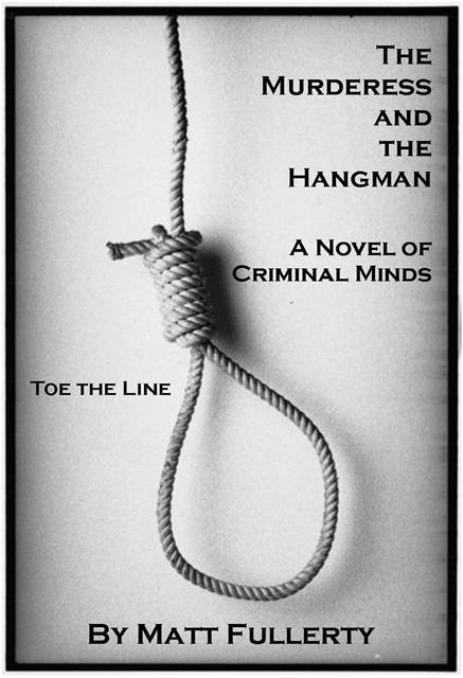
My novel about London, murder, mayhem, and a female killer!

My novel about London, murder, mayhem, and a female killer!
Please click the cover!

My novel about running, Princeton University, and a conman who lost it all!

My novel about running, Princeton University, and a conman who lost it all!
Please click the cover!

My novel about love, betrayal and chess in New Orleans

My novel about love, betrayal and chess in New Orleans
Please click the book!

My semi-autobiographical novel about a very British education and becoming an American!

My semi-autobiographical novel about a very British education and becoming an American!
Please click the cover!

My novel about London, murder, mayhem, and a female killer!

My novel about London, murder, mayhem, and a female killer!
Please click the cover!